Akshatha K
Getting Started
In an era where digital communication is crucial, WhatsApp continues to evolve, offering users innovative features to stay connected. Two such features are WhatsApp Communities and Groups. While both aim to facilitate group conversations, they serve different purposes and cater to distinct needs.
This article delves into the key differences between WhatsApp Communities and Groups, helping you decide which is best for your needs.
What Are WhatsApp Groups?
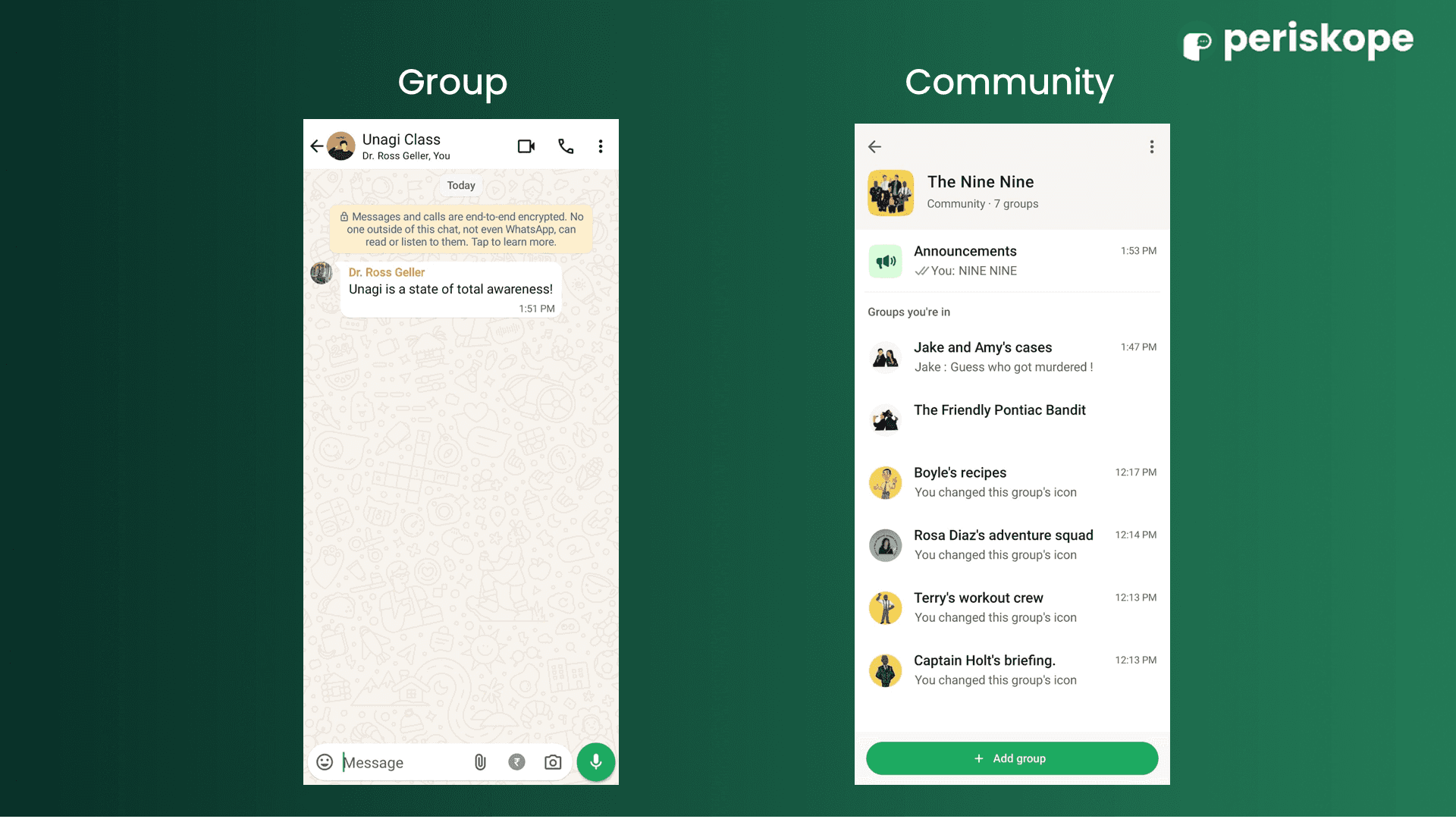
WhatsApp Groups have long been a staple feature for organizing conversations among friends, family, or colleagues. They allow users to bring together up to 1,024 members in a single chat, fostering communication within a defined circle. Groups are ideal for small to medium-sized discussions where everyone can participate equally.
Groups on WhatsApp are perfect for scenarios like planning events, discussing common interests, or managing team projects. Admins have the power to control group settings, such as adding or removing members, changing group names, and setting group descriptions. However, the simplicity of Groups also comes with limitations, particularly in managing larger or more complex communities.
What are WhatsApp Communities
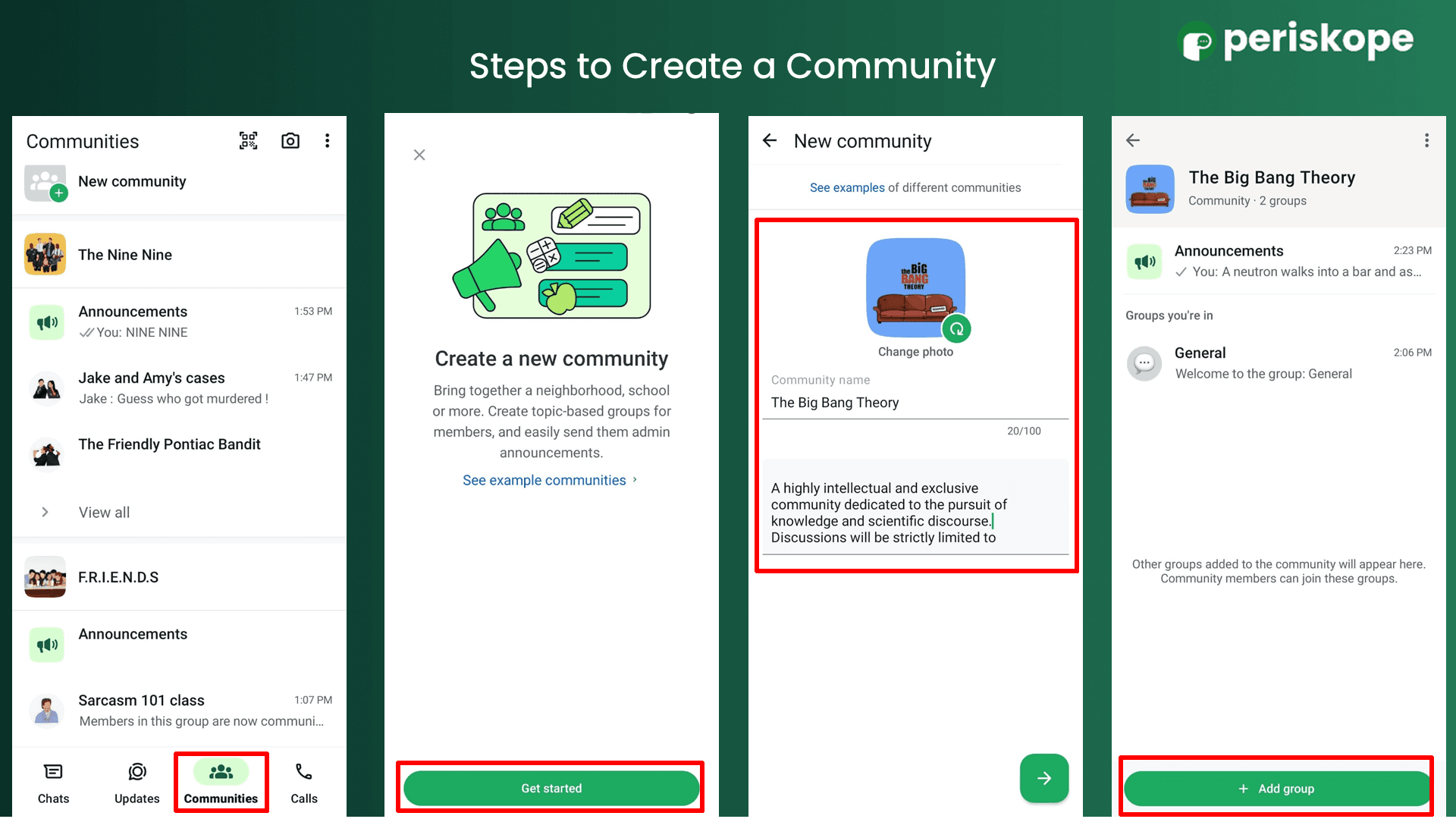
WhatsApp Communities is a newer feature designed to address the needs of larger and more complex communication structures. Communities allow users to create a network of multiple related groups under a single umbrella. This feature is particularly useful for organizations like schools, companies, or local communities that require structured communication across various teams or departments.
Within a Community, each group can operate independently, but they are all linked under the same Community. This setup makes it easier to manage multiple conversations without cluttering individual group chats. For instance, a school might have separate groups for each class, extracurricular activities, and staff communication, all under one Community.
Size of a WhatsApp Community: A WhatsApp Community can consist of up to 50 groups, with each group accommodating up to 1,024 members. This means that a Community can potentially bring together up to 51,200 members under one organized structure, making it an ideal tool for large-scale communication.
Communities also offer enhanced administrative tools, allowing for broader management capabilities across all linked groups. This makes it easier to send announcements, updates, or important messages to a wider audience without the need for multiple group chats.
Try Periskope
Manage WhatsApp Groups, Chats and Numbers at Scale
Key Differences Between WhatsApp Communities and Groups
Benefits of WhatsApp Communities over Groups
WhatsApp Communities offer several advantages, especially for larger organizations:
Centralized Management: Communities allow admins to manage multiple groups from a single point, making it easier to oversee communications across different teams or departments.
Improved Organization: By linking related groups under one Community, it’s easier to keep conversations organized, reducing the clutter in your chat list.
Enhanced Communication: Admins can send announcements or updates to all members of the Community, ensuring that important messages reach everyone without the need to send them to multiple groups.
Increased Privacy: Communities help maintain privacy by ensuring that members of different groups don’t have access to each other's contact information unless they share the same group.
Limitations of WhatsApp Communities over Groups
Despite their advantages, WhatsApp Communities also have some limitations:
Complexity: Managing a Community can be more complex than handling a single group, especially for those unfamiliar with the feature.
Not Ideal for Small Groups: For smaller, more intimate conversations, Communities may be overkill. A simple group might be more appropriate in such cases.